
Younger people, who usually have a longer investment horizon which allows them to handle the interim volatility, may go for them.

Global trends and trading activity of foreign investors would largely dictate terms in the equity markets this week amid a lack of major domestic triggers, analysts said. Markets may face near-term consolidation due to elevated valuations, they noted. "While the previous week was predominantly shaped by developments in the US Federal Reserve policy, attention will now shift to the Bank of Japan's policy decision on December 19," Santosh Meena, Head of Research, Swastika Investmart Ltd, said.

Despite the robust growth in this country, Apple's India share in its overall global sales remained modest -- constituting 1.5 per cent of its overall turnover of $389 billion in FY23.

The CBI on Thursday arrested Bharat Rashtra Samithi (BRS) leader K Kavitha in connection with a corruption case linked to the alleged Delhi excise policy scam, officials said.

India will be an important country in terms of manufacturing in future, Young Liu, chairman and CEO of Hon Hai Technology Group (Foxconn) has said, his latest comment adding to a growing chorus of global voices acknowledging the country's bold moves to position itself as electronics and hi-tech production powerhouse. In an interaction with reporters in Taipei, the top honcho of the Taiwanese electronics manufacturing giant said the development of the entire ecosystem and industrial chain, and opportunities for development in India are "very, very huge opportunities". "If there is no big change, India will be a very important country in terms of manufacturing in the future," Liu said.
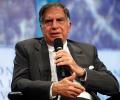
'What's sad today is that there are so many people who cannot find work, not because the country is devoid of that opportunity, but because we are not doing enough in the country.'

'I see a virtually zero impact on the sales of new vehicles with this move,' said an expert

A piece of slightly negative news can cause a serious setback, warns Debashis Basu.

So far this year, around 839,545 electric vehicles have been sold, accounting for approximately 6.69% of the total 12,541,684 vehicles sold.

In view of the unprecedented and peculiar circumstances under which vaccination drive is devised as an executive policy, the "wisdom of the executive should be trusted", it said.

The defence sector is seeing renewed interest by Indian corporates, says Jyoti Mukul

In days of smart, networked technology and no shame over collateral damage, what will blow up next -- cars, mobile phones, TV sets, refrigerators? And where?, asks Shyam G Menon.

Independence Day was celebrated across states and Union territories on Thursday, as several chief ministers announced job schemes while some others vowed their support for Prime Minister Narendra Modi's vision of a Viksit Bharat by 2047.

'it's not just youth in India who are left behind because of their inability to find jobs; nearly two-thirds of Indian women of working ages do not participate at all in the paid labour force.'

A strategist and a quintessential political leader with grassroots connect, Rajnath Singh is credited with expanding the Bharatiya Janata Party's organisational network in the Hindi heartland state of Uttar Pradesh in the 1990s and the subsequent decades.

Justifying his arrest, the ED said Kejriwal had been arrested bona fide and not for any mala fide or extraneous reasons.

India's gain will be an additional business of $300 million to $400 million per month if 10-11% of Bangladesh's export is diverted to Indian hubs like Tiruppur.
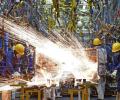
This is the ninth consecutive month that the manufacturing PMI remained above the 50-point-mark.

Prime Minister Narendra Modi virtually laid the foundation stone for a Rs 27,000-crore semiconductor assembly and test facility in Assam's Morigaon district on Wednesday. Chief Minister Himanta Biswa Sarma, who was present at the event organised at the site of the facility in Jagiroad, said today is a landmark day for Assam and the North East. "Hon'ble Prime Minister Shri Narendra Modi Ji is laying the foundation stone for the Rs 27,000 crore Tata Semiconductor Assembly and Test facility at Jagiroad," the chief minister posted on 'X'.

Interim Budget, the US Federal policy decision and quarterly earnings will be the major drivers for stock markets which may also see some consolidation this week, say analysts. Besides, investors would also focus on the trading activity of foreign investors and global trends for further cues. From the macroeconomic front, the PMI (Purchasing Managers' Index) data for the manufacturing sector is scheduled to be announced on Thursday.
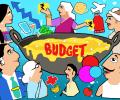
'We have essentially tried to set out an agenda for the next five years and it, in essence, represents the political commitment to that agenda.'

Worries related to the Iran-Israel conflict, quarterly earnings and foreign investors' trading activity are the key factors that would dictate stock markets this week, analysts said. Besides, trends in Brent crude oil and movement of the rupee against the dollar will also be crucial factors. This week will be crucial for the market amid ongoing worries about the conflict between Iran and Israel, said Pravesh Gour, Senior Technical Analyst, Swastika Investmart Ltd.
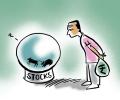
Stocks in the automotive, financial, cement, metal, and hotel sectors are likely to benefit if the Narendra Modi-led Bharatiya Janata Party (BJP) comes back to power for a third time. The key investment themes have been identified after analysing the Sankalp Patra - the party's manifesto for the next five years - released on Sunday.

Two of Apple Inc's global vendors -- Wistron and Foxconn (through Han Hoi), which already manufacture Apple phones in India -- and a third entity, Pegatron, which will be setting up a new plant, have applied to the government to be eligible under the PLI scheme for large-scale electronics manufacturers.

IT company Infosys on Thursday said its consolidated profit jumped 30 per cent to Rs 7,969 crore in the fourth quarter ended March 2024. The company posted a profit of Rs 6,128 crore in the same period a year ago, according to a regulatory filing. The consolidated revenue of Infosys during the reported quarter increased by 1.3 per cent to Rs 37,923 crore from Rs 37,441 crore in the same quarter a year ago.
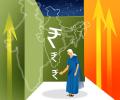
Citing various macroeconomic parameters that are doing pretty well, India's G20 Sherpa and former CEO of Niti Aayog Amitabh Kant projected that the country is all set to overtake Japan as 4th largest economy in the world by 2025. The size of India's GDP is currently ranked 5th, after the US, China, Germany, and Japan. It overtook the UK in 2022.

Will help in reviving the economy and push investment.

'Rather than taking a very short-term view on the markets, equity investing should be premised on longer term growth opportunities.'

It, however, does not manufacture devices on its own and rather does it through contract manufacturers.

Indian policymakers must realise that in buying small quantities of equipment, it becomes hard to start manufacturing them in India, explains Ajai Shukla.

On the price front, Indian manufacturing companies continued to face higher input costs during August.
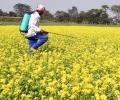
With farm Acts out of the picture, the government may look at reforming the input side of the agriculture sector - regulations and rules that govern seeds, fertilisers and plant chemicals. Sources said such a blueprint, which is aimed at making the life of farmers easier, with quicker approvals but not compromising on quality, is in the works as part of the 100-day agenda of Modi 3.0. Also, ways to administer fertiliser subsidy more effectively and cutting down on leakages and diversions to build on the success of neem-coated urea are being thought of.

Delhi Chief Minister Arvind Kejriwal, who was sent to Tihar Jail after a court remanded him in judicial custody till April 15 in the excise policy case, will remain under 24x7 watch with CCTV cameras in his cell and could watch TV and read books, officials said.

The economy is gaining traction with gradual pick up in manufacturing activity and moderation in contraction of services, spurred by comfortable liquidity conditions, an RBI article on Tuesday said. Observing that the retreat of the second wave of coronavirus pandemic has been slow, the RBI in an article on the 'State of Economy' said, the aggregate demand conditions are buoyed by the release of pent-up demand post unlock, while the supply situation is improving with the monsoon catching up to its normal levels and sowing activity gaining pace. "Reaffirming the traction that the economy is gaining, the manufacturing activity is gradually turning around, while contraction in services has moderated.

The wholesale price index (WPI)-based inflation rose in December at 0.73 per cent mainly due to a sharp rise in food prices. The WPI inflation was in the negative zone from April to October and had turned positive in November at 0.26 per cent.

Several candidates, including Taranjit Singh Sandhu, the BJP's Amritsar candidate, are promising resumption of India-Pakistan trade via the Attari-Wagah land route.

Bharat Electronics (BEL) reported excellent results for the January-March quarter (Q4) of FY24, which were driven by decent EBITDA margins and higher PAT as well as good revenue growth. Order inflows were also good. BEL is a major beneficiary of the policy of defence indigenisation.

The stock of commercial vehicle (CV) company Ashok Leyland is up 46 per cent in the past three months, gaining despite worries about a slowdown in sales volume. Brokerages have a mixed view on the country's second-largest medium and heavy commercial vehicle manufacturer. The company reported steady March quarter results and its valuation, focus on growth and medium-term prospects are positive, but some brokerages are cautious, given near-term demand concerns and the risk of competition increasing in the industry.

The contracts for the procurement of the platforms and weapons systems were signed in the presence of Defence Minister Rajnath Singh and defence secretary Giridhar Aramane, under whose guidance these deals fructified, an official readout said.

'India represents one of the top opportunities with robust growth, solid fundamentals, and openness to foreign investment.'
 © 2026 Rediff.com - Advertise with us - Disclaimer - Privacy Policy - Sitemap - Feedback - About us - Terms of use - Grievances